THIS IS AN ASPIRE PHARMA WEBSITE PAGE INTENDED FOR UK PATIENTS WHO HAVE BEEN PRESCRIBED BIQUELLE XL® (QUETIAPINE)
Biquelle XL® (quetiapine)
Prolonged-release tablets

About Biquelle XL®
Summary of Product Characteristics (SmPC) and Patient Information Leaflet (PIL)
The following links will take you to the electronic Medicines Compendium (eMC) website.
By using the links below, you will leave the Pathway Portfolio website and be re-directed to an external site. Aspire Pharma is not responsible for the content on external websites.
1
2
3
4
5
6
1
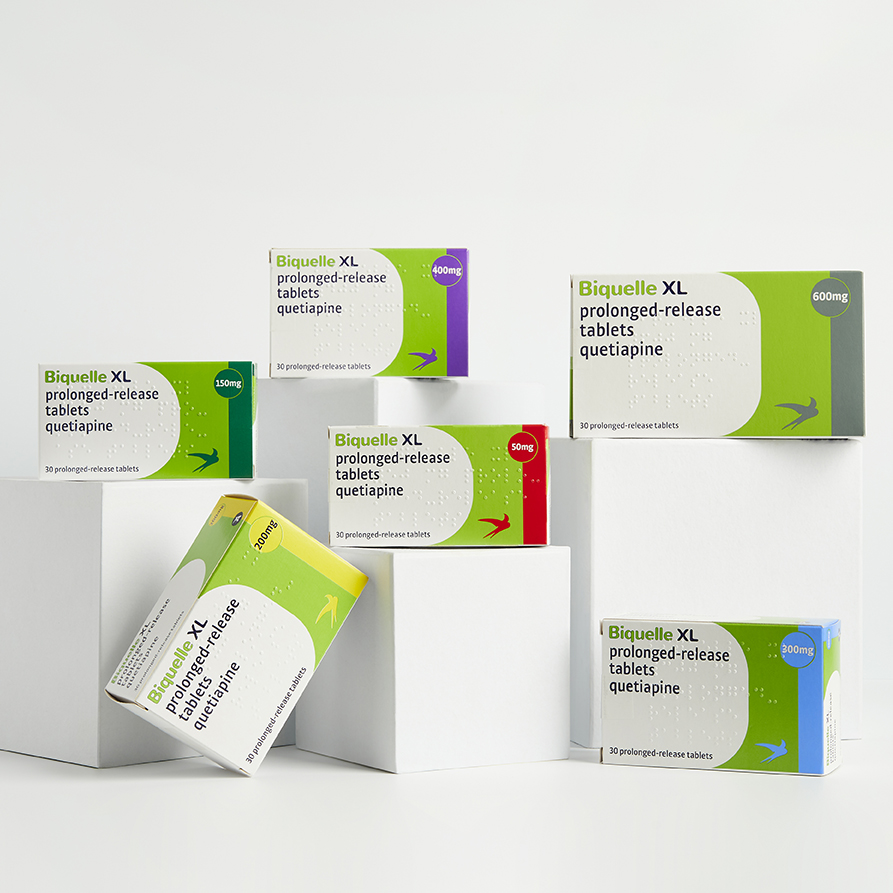
Biquelle XL® 5Omg
2
Biquelle XL® 150mg
3
Biquelle XL® 200mg
4
Biquelle XL® 300mg
5
Biquelle XL® 400mg
6
Biquelle XL® 600mg
Mental Health Conditions
Schizophrenia
Schizophrenia is a long-term mental health condition. Doctors often describe schizophrenia as a type of psychosis. This means the person may not always be able to distinguish their own thoughts and ideas from reality.1 The condition may develop slowly. The first signs can be hard to identify as they often develop during the teenage years.2
The symptoms of schizophrenia are usually classified into:2
Positive symptoms – any change in behaviour or thoughts, such as hallucinations or delusions
Negative symptoms – where people appear to withdraw from the world around them, take no interest in everyday social interactions, and often appear emotionless and flat
The exact causes of schizophrenia are unknown. Research suggests a combination of physical, genetic, psychological and environmental factors can make a person more likely to develop the condition. Some people may be prone to schizophrenia, and a stressful or emotional life event might trigger a psychotic episode. However, it’s not known why some people develop symptoms while others don’t.3
Bipolar Disorder
Bipolar disorder is characterised by extreme mood changes. These can range from extreme highs (mania or hypomania) to extreme lows (depression). Episodes of mania and depression usually last a few days or weeks at a time.
If you have bipolar disorder, you will usually have times where your mood is stable and you do not have any symptoms. This can last for weeks, months or years.4
The exact cause of bipolar disorder is unknown, but it’s thought to result from a combination of genetic and environmental factors. You are more likely to develop bipolar disorder if you have a parent or sibling with the condition. Factors that may increase the risk include childhood trauma or abuse, stressful life events, recreational drug use (such as cannabis or cocaine), and infection with the parasite Toxoplasma gondii, which causes toxoplasmosis.4
Major Depressive Disorder (MDD)
The symptoms of depression can be complex and vary widely between people. If you’re depressed, you may feel sad, hopeless and lose interest in things you used to enjoy.
The symptoms persist for weeks or months and are bad enough to interfere with your work, social life and family life. There are many symptoms of depression, which often fall into three categories: psychological, physical and social.5
There’s no single cause of depression. It can occur for a variety of reasons and it has many different triggers.
For some people, an upsetting or stressful life event, such as bereavement, divorce, illness, redundancy and job or money worries, can be the cause.
Different causes can often combine to trigger depression. For example, you may feel low after being ill and then experience a traumatic event, such as a bereavement, which brings on depression.6
Resources
By using the link below you will leave the Pathway Portfolio website and be re-directed to an external site; Aspire Pharma is not responsible for the content on external websites.



References:
- NHS. Schizophrenia. https://www.nhs.uk/mental-health/conditions/schizophrenia/overview/ (Accessed June 2026)
- NHS. Schizophrenia – Symptoms. https://www.nhs.uk/mental-health/conditions/schizophrenia/symptoms/ (Accessed June 2026)
- NHS. Schizophrenia – Causes. https://www.nhs.uk/mental-health/conditions/schizophrenia/causes/ (Accessed June 2026)
- NHS. Bipolar – Symptoms. https://www.nhs.uk/mental-health/conditions/bipolar-disorder/ (Accessed June 2026)
- NHS.. Clinical Depression – Symptoms. https://www.nhs.uk/mental-health/conditions/clinical-depression/symptoms/ (Accessed June 2026)
- NHS. Clinical Depression – Causes. https://www.nhs.uk/mental-health/conditions/clinical-depression/causes/ (Accessed June 2026)
MAT-UK-XLP-0050-1 | June 2026
