THIS IS AN ASPIRE PHARMA WEBSITE PAGE INTENDED FOR UK PATIENTS WHO HAVE BEEN PRESCRIBED DYZANTIL® (SODIUM VALPROATE)

WARNING FOR WOMEN AND GIRLS
Valproate is an effective medicine for epilepsy. This medicine can seriously harm an unborn baby. Always use effective contraception during treatment. It is important to visit your specialist to review your treatment at least once each year. Read the package leaflet carefully before using this medication. Never stop valproate without discussing with your doctor first as your condition may become worse. If you are thinking about becoming pregnant, talk to your doctor straight away. The patient guide for the pregnancy prevention programme (prevent) can be found here.
Dyzantil®▼(sodium valproate)
Prolonged-release tablets

About Dyzantil®
Dyzantil is marked with a black triangle (▼) because this medicine is subject to additional monitoring. This will allow quick identification of new safety information. You can help by reporting any side effects you may get. See https://yellowcard.mhra.gov.uk/ for how to report side effects.
Summary of Product Characteristics (SmPC) and Patient Information Leaflet (PIL)
The following links will take you to the electronic Medicines Compendium (eMC) website.
By using the links below, you will leave the Pathway Portfolio website and be re-directed to an external site. Aspire Pharma is not responsible for the content on external websites.
1
2
3
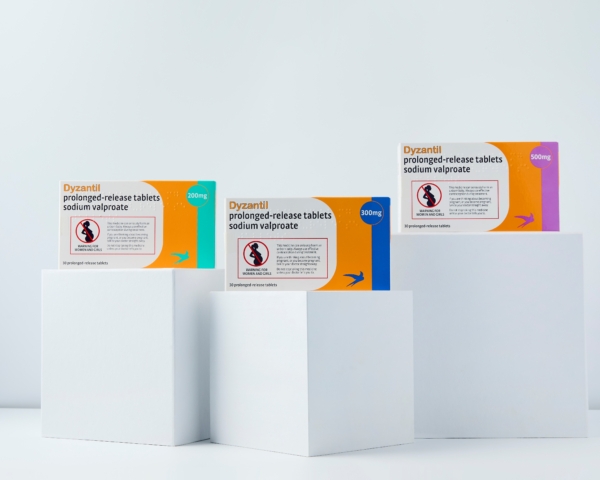
1
Dyzantil 300mg
2
Dyzantil 500mg
3
Dyzantil 200mg
Sodium Valproate Risk Minimisation Materials for Patients
The following links will take you to guidance documents on the electronic Medicines Compendium (eMC) website to help support the understanding of important safety information associated with valproate use.
By using the links below, you will leave the Pathway Portfolio website and be re-directed to an external site. Aspire Pharma is not responsible for the content on external websites.
Sodium Valproate and Pregnancy
We must make you aware of the regulations introduced by the Medicines and Healthcare products Regulatory Agency (MHRA) around the way in which the drug, sodium valproate, present within Dyzantil® (sodium valproate), is restricted in use in women and girls of childbearing age.1
Sodium valproate is associated with risks for babies exposed to the drug during pregnancy. There is a 10% risk of birth defects in newborns and a 30-40% risk of neurodevelopmental disorders, which may persist. New measures have been designed to ensure that all women who have to take the drug for their epilepsy, are fully informed of the risks, including being advised on the importance of using effective contraception and being invited for a yearly treatment review.1 Should you have any more questions, please discuss this with your doctor or pharmacist for more information.
Women and girls who are of childbearing potential must comply with the conditions of the PREVENT Programme and these include the use of effective contraception and at least annual review of treatment by a specialist. For further information about the PREVENT Programme or about Sodium Valproate, please refer to the following link: https://www.gov.uk/guidance/valproate-use-by-women-and-girls.
What is Epilepsy?
Definition
Epilepsy is a common neurological condition that affects the brain and causes frequent seizures.
Seizures can be defined as bursts of electrical activity in the brain that temporarily affect how our brain functions. Epilepsy can start at any age, but usually develops in childhood or in people over the age of 50. Epilepsy can be a lifelong condition, however, it can sometimes improve over time.2
Symptoms
Depending on the part of the brain involved, symptoms of seizures can vary, affecting people in many different ways.3
Usually, the only symptom of epilepsy is having seizures, which can cause jerking or twitching movements, stiffness or floppiness, falls, loss of awareness, unusual sensations or behaviours, or loss of bladder control. Seizures usually last a few seconds or minutes and stop by themselves, and you may or may not remember them afterwards.2
Causes
Epilepsy occurs when the normal electrical activity in the brain is disrupted. It’s often thought to be linked to genes inherited from your parents or to changes in your own genes. In some cases, epilepsy develops after damage to the brain, such as from a head injury, stroke or infection. However, for many people, the exact cause is unknown.2
Seizure triggers
There are some things which make seizures more likely to occur in people with epilepsy. These can be referred to as ‘triggers’. Triggers don’t cause epilepsy, but they can make seizures more likely.4 Common seizure triggers include stress, lack of sleep and alcohol. Other seizure triggers that have been reported by people with epilepsy include: not taking epilepsy medicine as prescribed, having an illness which causes a high temperature, periods, recreational drugs and flashing or flickering lights.4
Keeping a seizure diary, detailing when you have a seizure, what you did beforehand and how you were feeling, may help you to identify any possible triggers, as well as notice any patterns over time.2,4
Resources
By using the link below you will leave the Pathway Portfolio website and be re-directed to an external site; Aspire Pharma is not responsible for the content on external websites.



References:
- Epilepsy Society: Sodium valproate. https://epilepsysociety.org.uk/about-epilepsy/sodium-valproate (Accessed June 2026)
- NHS: Epilepsy. https://www.nhs.uk/conditions/epilepsy/ (Accessed June 2026)
- Epilepsy Action: Epileptic seizures explained. https://www.epilepsy.org.uk/info/seizures (Accessed June 2026)
- Epilepsy Action: Seizure triggers. https://www.epilepsy.org.uk/info/seizure-triggers (Accessed June 2026)
MAT-UK-XLP-0057-3 | August 2026
